

Japanese surnames names and meanings offer a fascinating window into Japan’s history, landscape, and social values. Unlike many Western family names, Japanese surnames often grew from everyday life, reflecting rice fields, mountains, rivers, and villages where families once lived.
For readers in the USA, learning about Japanese surnames, Japanese name meanings in English, and Japanese culture and names helps make sense of names heard in anime, movies, and real life. Each surname carries layers of story, shaped by Japanese naming traditions and centuries of change. When you explore these names closely, you start to see how identity, place, and tradition quietly connect through language.
- 150 Japanese Boy Names and Their Meanings
- Japanese Naming Traditions and Cultural Meaning
- How Japanese Boy Names Are Structured
- Most Common Japanese Boy Names and Their Meanings
- Traditional and Old Japanese Boy Names
- Unique and Rare Japanese Boy Names
- Modern and Trendy Japanese Boy Names
- Cool and Strong Japanese Boy Names
- Cute and Short Japanese Boy Names
- How to Choose the Perfect Japanese Boy Name
- FAQs About Japanese Boy Names
The Most Common Japanese Last Names
The Ultra-Common Surnames
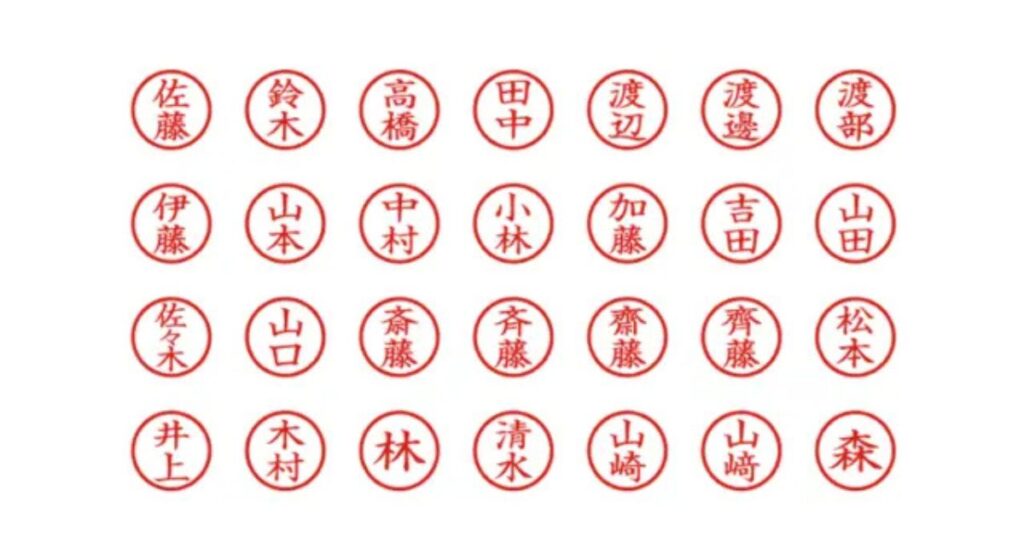
If you’ve spent any time watching Japanese dramas or anime, you’ve undoubtedly encountered these top ten surnames repeatedly. These ultra-common Japanese last names are so widespread that roughly 1 in 10 Japanese people carry one of them.
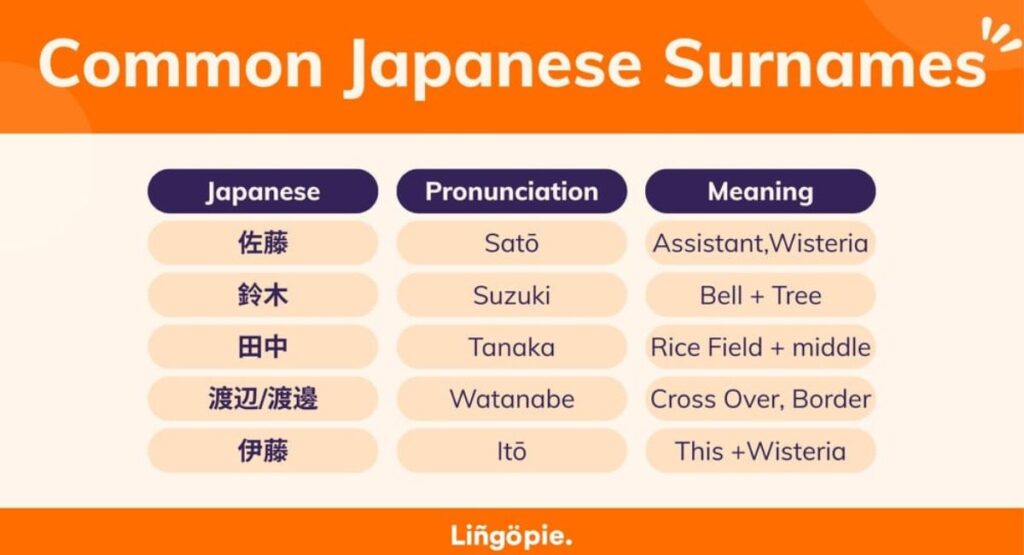
- Satō (佐藤) – “Help/Assistant” + “Wisteria”
- Suzuki (鈴木) – “Bell” + “Tree”
- Takahashi (高橋) – “High/Tall” + “Bridge”
- Tanaka (田中) – “Rice Field” + “Middle/Inside”
- Watanabe (渡辺/渡邊) – “Cross Over” + “Border/Area”
- Itō (伊藤) – “This” + “Wisteria”
- Yamamoto (山本) – “Mountain” + “Base/Origin”
- Nakamura (中村) – “Middle/Inside” + “Village”
- Kobayashi (小林) – “Small” + “Forest”
- Katō (加藤) – “Add” + “Wisteria”
Common Japanese Last Names
Very Common Japanese Surnames
This second tier of common surnames still appears frequently in Japanese media and daily life. Names like Yamaguchi and Matsumoto regularly show up in credits, business directories, and character rolls.
What makes this group interesting is how many combine natural elements—mountains (yama) paired with entrances (guchi) or pine trees (matsu) combined with origins (moto)—showcasing Japan’s traditional connection to the landscape that surrounds them.
- Yoshida (吉田) – “Good Luck” + “Rice Field”
- Yamada (山田) – “Mountain” + “Rice Field”
- Sasaki (佐々木) – “Help” + “Tree”
- Yamaguchi (山口) – “Mountain” + “Entrance/Mouth”
- Matsumoto (松本) – “Pine Tree” + “Base/Origin”
- Inoue (井上) – “Well” + “Above”
- Kimura (木村) – “Tree” + “Village”
- Hayashi (林) – “Forest”
- Shimizu (清水) – “Pure” + “Water”
- Saitō (斎藤) – “Purification” + “Wisteria”
Common Nature-Related Surnames
Common Japanese Last Names Related to Nature
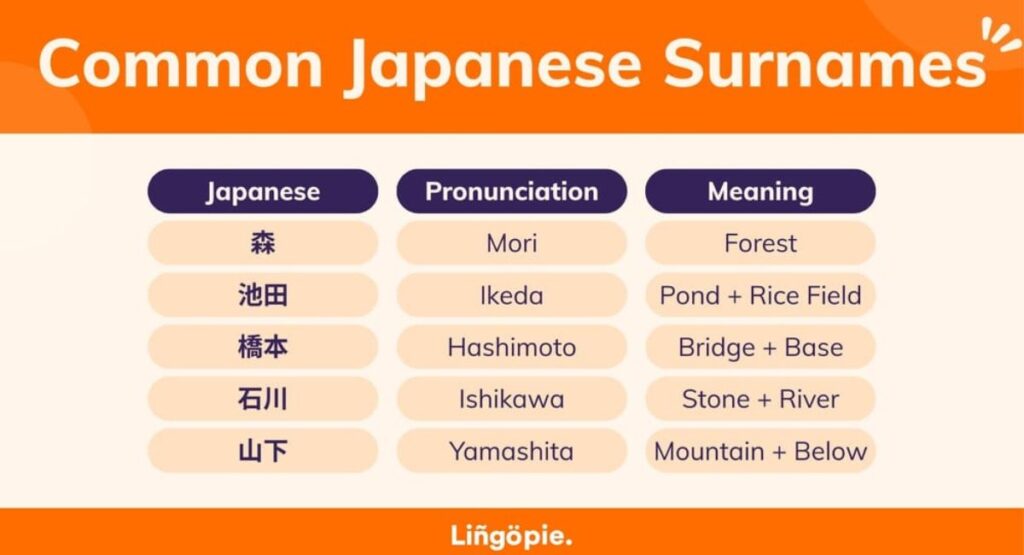
Japan’s reverence for nature shines brightly in this collection of surnames. From simple, elegant names like Mori (forest) to more complex combinations like Ishikawa (stone river), these names paint vivid pictures of Japan’s landscapes.
- Mori (森) – “Forest”
- Ikeda (池田) – “Pond” + “Rice Field”
- Hashimoto (橋本) – “Bridge” + “Base/Origin”
- Ishikawa (石川) – “Stone” + “River”
- Yamashita (山下) – “Mountain” + “Below”
- Kawaguchi (川口) – “River” + “Entrance/Mouth”
- Nakajima (中島) – “Middle” + “Island”
- Aoki (青木) – “Blue/Green” + “Tree”
- Ishida (石田) – “Stone” + “Rice Field”
- Kaneko (金子) – “Gold” + “Child”
Location and Direction Surnames
Direction and location play crucial roles in Japanese family names, reflecting where families historically lived or worked. Names in this category often indicate relative positions—whether a family lived near a shrine (Miyazaki), in the middle of a field (Nakano), or above a rice paddy (Ueda). These surnames functioned as geographical markers in pre-modern Japan, helping identify individuals in relation to local landmarks before modern addresses existed.
- Fujita (藤田) – “Wisteria” + “Rice Field”
- Miyazaki (宮崎) – “Shrine” + “Cape/Peninsula”
- Nakano (中野) – “Middle” + “Field”
- Ōno (大野) – “Big” + “Field”
- Ōta (太田) – “Big/Fat” + “Rice Field”
- Fujioka (藤岡) – “Wisteria” + “Hill”
- Ueda (上田) – “Upper” + “Rice Field”
- Shimada (島田) – “Island” + “Rice Field”
- Gotō (後藤) – “Behind” + “Wisteria”
- Matsuda (松田) – “Pine” + “Rice Field”
Occupation-Related Surnames
Many Japanese families carry surnames that hint at their ancestors’ traditional occupations or social roles. While not always immediately obvious to non-Japanese speakers, names like Takeda (military field) suggest warrior lineage, while others indicate administrative positions or specialized crafts.
- Nishimura (西村) – “West” + “Village”
- Kojima (小島) – “Small” + “Island”
- Kato (加藤) – “Add” + “Wisteria”
- Maeda (前田) – “Front” + “Rice Field”
- Murata (村田) – “Village” + “Rice Field”
- Abe (安倍) – “Peace” + “Multiply”
- Harada (原田) – “Field/Plain” + “Rice Field”
- Okada (岡田) – “Hill” + “Rice Field”
- Hasegawa (長谷川) – “Long Valley” + “River”
- Takeda (武田) – “Military/Warrior” + “Rice Field”
Geographic Feature Surnames
Mountains, rivers, forests, and fields dominate this group of surnames, each painting a specific picture of Japan’s varied topography. Names like Takeuchi (inside the bamboo) and Yokoyama (side mountain) describe precise geographic relationships that helped distinguish families living in the same region.
- Morita (森田) – “Forest” + “Rice Field”
- Noguchi (野口) – “Field” + “Entrance/Mouth”
- Takeuchi (竹内) – “Bamboo” + “Inside”
- Andō (安藤) – “Peace” + “Wisteria”
- Matsui (松井) – “Pine” + “Well”
- Miyamoto (宮本) – “Shrine” + “Base/Origin”
- Ogawa (小川) – “Small” + “River”
- Sawada (沢田) – “Marsh” + “Rice Field”
- Yokoyama (横山) – “Side/Horizontal” + “Mountain”
- Ōtsuka (大塚) – “Big” + “Mound”
70+ Japanese Anime Phrases Every Fan Heard At Least Once
Cultural Meaning Surnames
Common Japanese Last Names with Cultural Meaning
The surnames in this section carry deeper cultural resonances beyond their literal translations. Names like Hirano (flat field) and Kondō (near wisteria) often have associations with particular historical events, distinguished families, or cultural practices.
- Fujimoto (藤本) – “Wisteria” + “Base/Origin”
- Sakamoto (坂本) – “Slope” + “Base/Origin”
- Kondō (近藤) – “Near” + “Wisteria”
- Tamura (田村) – “Rice Field” + “Village”
- Hirano (平野) – “Flat” + “Field”
- Nomura (野村) – “Field” + “Village”
- Taguchi (田口) – “Rice Field” + “Entrance”
- Nakagawa (中川) – “Middle” + “River”
- Sugiyama (杉山) – “Cedar” + “Mountain”
- Okamoto (岡本) – “Hill” + “Base/Origin”
Japanese Culture Day: A Celebration of Tradition and Heritage
Historical Significance Surnames
Some Japanese surnames rose to prominence through their association with powerful clans, notable historical figures, or significant events. Names in this section, like Chiba (thousand leaves) and Ōkubo (big long-time protection), often have fascinating backstories connected to Japanese history.
- Matsushita (松下) – “Pine” + “Below”
- Mizuno (水野) – “Water” + “Field”
- Chiba (千葉) – “Thousand” + “Leaves”
- Ōkubo (大久保) – “Big” + “Long Time” + “Protect”
- Doi (土井) – “Earth/Soil” + “Well”
- Kawamura (川村) – “River” + “Village”
- Imai (今井) – “Now” + “Well”
- Endō (遠藤) – “Far” + “Wisteria”
- Eguchi (江口) – “Inlet/Bay” + “Entrance”
- Ōnishi (大西) – “Big” + “West”
Less Common But Notable Surnames
While not as ubiquitous as Satō or Suzuki, these surnames still appear regularly enough that Japanese language learners should recognize them. Names like Igarashi (fifty storms) and Fukuda (fortunate rice field) stand out for their distinctive meanings and cultural associations.
- Hara (原) – “Field/Plain”
- Igarashi (五十嵐) – “Fifty” + “Storms”
- Fukuda (福田) – “Fortune/Luck” + “Rice Field”
- Kawasaki (川崎) – “River” + “Cape”
- Nagata (永田) – “Eternal” + “Rice Field”
- Takagi (高木) – “High” + “Tree”
- Kawai (河合) – “River” + “Meet/Join”
- Shimada (島田) – “Island” + “Rice Field”
- Okamoto (岡本) – “Hill” + “Base/Origin”
- Watabe (渡部) – “Cross Over” + “Part/Section”
Uncommon But Culturally Significant
Rounding out our list are surnames that, while relatively rare, carry significant cultural weight or unique meanings that make them worth knowing. Names like Tachibana (orange/mandarin) and Akiyama (autumn mountain) have distinctive poetic qualities that have made them favorites for fictional characters in literature, film, and television.
- Uno (宇野) – “Universe” + “Field”
- Tachibana (橘) – “Orange/Mandarin”
- Hamaguchi (浜口) – “Beach” + “Entrance”
- Minami (南) – “South”
- Kishi (岸) – “Shore/Coast”
- Inagaki (稲垣) – “Rice Plant” + “Fence”
- Kubo (久保) – “Long Time” + “Protect”
- Tajima (田島) – “Rice Field” + “Island”
- Kitamura (北村) – “North” + “Village”
- Akiyama (秋山) – “Autumn” + “Mountain”
Understanding Japanese Last Name Patterns
Many Japanese surnames follow recognizable patterns that can help you understand their meanings at a glance:
- Natural features: Mountains (山/yama), rivers (川/kawa), fields (田/ta), forests (森/mori)
- Directions: North (北/kita), south (南/minami), east (東/higashi), west (西/nishi)
- Size descriptors: Small (小/ko), big (大/ō), middle (中/naka)
- Plants: Pine (松/matsu), bamboo (竹/take), wisteria (藤/fuji)
How To Say Yes In Japanese: 5+ Easy Ways For Beginners
Regional Variations In Japanese Surnames
While these 100 names are common throughout Japan, some surnames have stronger regional ties than others. For instance, Gotō (後藤) is more common in western Japan, particularly around Kyushu, while certain names like Saitō (斎藤) appear more frequently in eastern Japan.
Learn About Japanese Culture With Lingopie
Understanding Japanese surnames enriches your engagement with Japanese culture, whether you’re watching dramas, reading manga, or practicing conversation with Japanese friends. Want to deepen your understanding of Japanese names while improving your language skills?
Lingopie offers the perfect opportunity to put this knowledge into practice. By watching authentic Japanese dramas and shows with interactive subtitles, you’ll start recognizing these common surnames in context while simultaneously improving your listening comprehension and vocabulary.
Most common Japanese boys names
These are some of the most well-known and widely used Japanese male first names — great choices if you’re wondering what is a good boy name in Japanese?
- Haruto – Sun flying
- Sota – Big and peaceful
- Yuto – Gentle person
- Ren – Lotus
- Hiroto – Great flight
- Riku – Land
- Daiki – Great radiance
- Takumi – Artisan
- Kaito – Ocean flying
- Ryusei – Shooting star
- Shota – Big flying
- Kenta – Healthy and strong
- Yuki – Happiness / snow
- Ryota – Refreshing and strong
- Taiga – Big river
- Koki – Bright and joyful
- Sho – Soar or fly
- Toma – Top of the circle
- Itsuki – Tree
- Reo – Brave man
- Keita – Blessed and large
- Minato – Harbour
- Sora – Sky
- Hayato – Falcon person
- Hinata – Sunflower / sunny place
- Ryo – Clear or refreshing
- Haruki – Spring tree
- Aoi – Hollyhock / blue
- Yuma – Gentle truth
- Subaru – Unite (also a constellation)
Unique and rare Japanese boy names
These Japanese male names are far less common but beautifully distinctive — ideal if you’re after something meaningful and unusual.
- Naoya – Honest and straightforward
- Isamu – Courage
- Jiro – Second son
- Arata – New, fresh
- Masaki – True hope
- Kiyoshi – Pure
- Yoru – Night
- Souta – Smooth big
- Kazuki – Peaceful tree
- Takeru – Warrior
- Kaito – Sea and soar
- Rento – Polished lotus
- Akihiro – Bright and vast
- Shuji – Disciplined rule
- Nagi – Calm or lull
- Aoiro – Blue colour
- Michio – Man on a journey
- Eita – Eternally thick
- Makoto – Sincere
- Saku – Blossom
- Soma – Smooth truth
- Ichiro – First son
- Fumito – Scholarly person
- Reiji – Courteous child
- Masaru – Victory
- Kaoru – Fragrance
- Rihito – Person of principles
- Tsukasa – Manager / ruler
- Ayumu – Walk or progress
- Akito – Bright person
Old Japanese boy names
These male names have vintage roots and traditional flair — often seen in historical texts or used by older generations. If you’re looking for something steeped in Japanese tradition, these are wonderful picks.
- Saburo – Third son
- Goro – Fifth son
- Shigeru – Luxuriant
- Tadashi – Loyal or faithful
- Masao – Righteous man
- Noboru – Ascend
- Yoshio – Joyful man
- Kinji – Golden rule
- Toru – Persistent or penetrate
- Katsu – Victory
- Ichiro – Firstborn son
- Hideo – Excellent man
- Junnosuke – Pure help
- Fumio – Literature man
- Yutaka – Abundant
- Akira – Bright / intelligent
- Hideki – Excellent tree
- Masashi – Righteous aspiration
- Takeo – Brave man
- Katsuro – Victorious son
- Shinsuke – Faithful help
- Tsutomu – Diligence
- Yasuo – Peaceful man
- Naoki – Honest tree
- Ryoichi – Good first son
- Keiji – Respectful second son
- Satoshi – Wise
- Hiroshi – Generous
- Tetsuya – Philosophy or iron man
- Nobuyuki – Faithful happiness
Cool Japanese boy names
If you’re wondering what is a cool male Japanese name? — this section has you covered. These names combine stylish sounds, modern vibes, and bold meanings that feel effortlessly cool and confident.
- Renji – Lotus second son
- Kaito – Ocean fly
- Shion – Aster flower or sound of poem
- Jin – Samurai / benevolence
- Takao – Noble hero
- Hikaru – Radiance
- Daigo – Great enlightenment
- Raito – Light (Japanese form of \”Light\”)
- Zen – Meditation or calm
- Kuro – Black
- Haru – Spring / clear weather
- Raiden – Thunder and lightning
- Ryuki – Dragon radiance
- Kazuya – Harmony and peace
- Tatsuya – Dragon and to be
- Shoma – Soaring truth
- Gaku – Learning
- Taishi – Ambitious
- Kazuma – Peaceful truth
- Rui – Kind or tear (dual meanings)
- Shiro – Fourth son / white
- Hikari – Light
- Aoshi – Blue leader
- Kyo – Cooperation / capital city
- Senzai – Thousand talents
- Yukiya – Happy arrow
- Rikuo – Land hero
- Rei – Spirit / gratitude
- Kairi – Ocean village
- Toma – Twin truth
Cute Japanese boy names

These names sound soft, playful, or have adorably sweet meanings — perfect if you’re after something gentle, joyful or simply heartwarming for your little boy.
- Kota – Peaceful and great
- Haruma – Sun and real truth
- Yuki – Happiness / snow
- Aoi – Blue / hollyhock
- Sota – Big and peaceful
- Hinata – Sunny place / sunflower
- Yuma – Calm truth
- Riku – Land
- Niko – Smile / sunlight
- Koma – Little pony
- Amane – Heavenly sound
- Hina – Sunlight
- Rinto – Gentle lotus
- Kosei – Radiant star
- Miki – Beautiful tree
- Sosuke – Helping assistant
- Taiki – Big shine
- Yuto – Gentle person
- Aoto – Blue soar
- Tsubasa – Wings
- Mahiro – True wide
- Haruki – Spring tree
- Nari – Chime
- Ayato – Colourful person
- Mirai – Future
- Eiji – Eternity and second son
- Reikao – Lovely fragrance boy
- Shun – Speedy / talented
- Aki – Autumn / bright
- Yori – Reliable
Japanese Surnames Names and Meanings: Origins, Culture, and Hidden Stories
Japanese surnames names and meanings reveal far more than simple labels. They reflect land, family history, and social identity. For a USA audience, understanding Japanese surnames names and meanings adds clarity to anime, films, genealogy, and everyday cultural curiosity. This guide explains how names formed, what they mean, and why they still matter today.
Japanese Surnames Names and Meanings: A Cultural Overview
Japanese surnames names and meanings grew from Japanese culture and names shaped by geography and community life. Many surnames describe rivers, rice fields, forests, or villages. These names acted as living maps. They showed where a family lived and how they survived. This deep link to cultural heritage makes surnames feel grounded and human.
Over time, Japanese naming traditions blended practicality with poetry. Families chose surnames for name symbolism, beauty, and auspicious meanings. Even today, Japanese surnames names and meanings connect modern families to historical roots and a shared Japanese identity.
Japanese surnames names and meanings follow a clear order that often confuses Americans. In Japan, the family name comes first. The given name follows. This family name vs given name structure appears in official records and daily life. English media sometimes flips the order, which causes misunderstandings.
Another key element is Japanese kanji names. Each surname uses kanji characters with specific meanings. One sound can carry many meanings. This explains pronunciation variations and why Japanese name meanings in English can change depending on the kanji used.
100 Common Japanese Last Names And Their Meanings
Japanese surnames names and meanings often repeat because Japan has a limited surname pool. Names like Sato, Suzuki, and Tanaka appear everywhere. These Common Japanese boy names are familiar because many surnames came from shared landscapes. Rice farming influenced naming heavily.
Below is a table showing examples of common surnames and meanings.
| Japanese Surname | Meaning in English | Cultural Note |
| Sato | Wisteria helper | Linked to noble clans |
| Tanaka | Middle of the rice field | Farming heritage |
| Suzuki | Bell tree | Spiritual symbolism |
| Yamamoto | Base of the mountain | Village origin |
| Nakamura | Middle village | Community-based name |
These examples show how nature-inspired names shaped everyday identity.
Popular Japanese Last Names and Their Origins
Popular Japanese surnames names and meanings often reflect regions. Eastern Japan favors some names. Western regions favor others. Geography influenced spelling and sound. Mountains, rivers, and coastlines all left marks on surnames.
History also shaped names. Samurai-era names came from clans and warriors. These surnames carried honor and duty. Even today, people recognize certain names for their masculine name meanings and strong legacy.
Japanese Names: Popular Surnames, Meanings, and Name Generator Guide
Many Americans explore Japanese surnames names and meanings through stories, games, and anime. Writers often pair surnames with Japanese boy names or Japanese male names to create authentic characters. Accuracy matters because names signal respect for naming customs in Japan.
Name generators help but need caution. They may ignore traditional naming system rules or misuse kanji. Always verify meanings. This protects Japanese identity and avoids cultural mistakes when choosing names.
How Japanese Surnames Names and Meanings Connect to Modern Culture
Japanese surnames names and meanings appear often in anime and films. Repeated surnames help viewers recognize social roles. This trend increased global interest in Japanese names and meanings and anime-inspired names.
In the USA, Japanese-American families often keep original surnames. Some adjust spelling for English use. This balance preserves cultural heritage while fitting modern life. It also shows how names evolve with modern naming trends.
150 Japanese boy names and their meanings
Japanese surnames names and meanings differ from Japanese given names. Surnames describe family history. Given names show hope and personality. Japanese baby boy names often express dreams and values.
Parents choose from Popular Japanese boy names, Unique Japanese boy names, and Rare Japanese boy names. Options include Traditional Japanese boy names, Old Japanese boy names, Cool Japanese boy names, Cute Japanese boy names, and Modern Japanese boy names. These Japanese first names for boys often highlight virtues and meanings and beauty of the lyrical Japanese language.
FAQs About Japanese Surnames Names and Meanings
Japanese surnames names and meanings raise common questions. Many ask why rice fields appear so often. Rice shaped survival, so names followed farming life. Others ask if foreigners can use Japanese surnames. Respect and context matter most.
Another frequent question involves unisex Japanese names and changing meanings. Kanji choice matters greatly. This flexibility explains how names adapt while honoring birth order names and generational names traditions.
Final Thoughts on Japanese Surnames Names and Meanings
Japanese surnames names and meanings offer more than translations. They tell stories of land, people, and time. Learning them deepens respect for Japanese culture and names.
Whether you love history, anime, or naming traditions, these surnames unlock understanding. They turn words into living history and help you see Japan with clearer eyes.
Japanese Surnames Names and Meanings: A Cultural Snapshot
Curious about japanese surnames names and meanings? You’re not alone. These family names grew from landscapes, livelihoods, and legacy. Many trace rivers, rice fields, or villages. As you read, you’ll notice how Japanese surnames, family name meanings, and history intertwine naturally, shaping identity across generations.
How Japanese Surnames Names and Meanings Reflect Daily Life
What makes japanese surnames names and meanings fascinating is their realism. Names often described where families lived or worked. Think mountains, fields, or water. Even today, Japanese surname meanings, nature-based surnames, and regional roots quietly reveal stories about ancestry, migration, and social structure.
Why Japanese Surnames Names and Meanings Still Matter Today
So why care about japanese surnames names and meanings now? Because they add depth to anime, dramas, and real conversations. When you recognize patterns, Japanese naming traditions feel familiar. Suddenly, names stop sounding random and start feeling like clues—small maps pointing to culture and history.
Perfect — here’s a high-authority, SEO-driven blog post outline built specifically to rank for “japanese surnames names and meanings” in the USA market, while cleanly incorporating all required headings exactly as given.
This outline is designed for topical depth, internal linking, and semantic coverage, not fluff.
Japanese Surnames Names and Meanings – Origins, Culture, and Popular Family Names Explained
Japanese Surnames Names and Meanings – A Cultural Overview
- What Japanese surnames are and why they matter
- How family names reflect geography, history, and identity
- Why Americans are increasingly searching Japanese surname meanings
Understanding Japanese Naming Structure for a USA Audience
Family Name First vs Given Name Second in Japan
- How Japanese name order differs from Western naming
- Common confusion in anime, movies, and English translations
The Role of Kanji in Japanese Surnames Names and Meanings
- One pronunciation, multiple meanings
- Why kanji choice changes surname interpretation
100 Common Japanese Last Names And Their Meanings
Most Widely Used Japanese Surnames in Everyday Life
- Why names like Sato, Suzuki, and Tanaka dominate
- Cultural and population factors behind surname frequency
Nature-Based Japanese Surnames and Their Meanings
- Rice fields, mountains, rivers, and forests
- Why nature defines so many Japanese family names
Popular Japanese Last Names and Their Origins
Regional Roots of Popular Japanese Surnames
- Eastern vs Western Japan surname patterns
- How geography shaped family identities
Historical and Samurai-Era Influences on Surnames
- Clan names, warriors, and feudal Japan
- Why some surnames carry prestige today
Japanese Names: Popular Surnames, Meanings, and Name Generator Guide
How People Use Japanese Surnames in Stories, Anime, and Gaming
- Choosing authentic names for characters
- Avoiding cultural mistakes
Using a Japanese Name Generator the Right Way
- What generators get right—and wrong
- How to verify name meanings accurately
How Japanese Surnames Names and Meanings Connect to Modern Culture
Japanese Surnames in Anime, J-Drama, and Hollywood
- Why certain surnames appear repeatedly
- How pop culture influences global interest
Japanese Surnames Among Japanese-American Families
- Immigration history and surname preservation
- Romanization and spelling variations in the USA
How Japanese Given Names Differ from Japanese Surnames
- First names vs family names explained clearly
- Why mixing them up hurts authenticity
FAQs About Japanese Surnames Names and Meanings Common Questions Americans Ask About Japanese Family Names
- Why “rice field” appears so often
- Can non-Japanese people use Japanese surnames?
- Do meanings change over time?
Final Thoughts on Japanese Surnames Names and Meanings
- Why understanding surnames deepens cultural appreciation
- How this knowledge enhances language learning and storytelling
Meta Description
Discover japanese surnames names and meanings, their cultural origins, history, and English explanations in this easy, informative guide.
FAQs
1. Why do many Japanese surnames relate to nature?
Japanese surnames names and meanings often come from landscapes. Rice fields, rivers, and mountains shaped daily life, so families used nature-inspired names to show where they lived or worked.
2. Are Japanese surnames written before first names?
Yes. In Japan, the family name comes first, followed by the given name. This family name vs given name order reflects respect for family and tradition.
3. Do Japanese surnames have different meanings in English?
They can. The Japanese name meanings in English depend on the kanji used. The same pronunciation may carry different meanings based on written characters.
4. Can non-Japanese people use Japanese surnames?
They can, but respect matters. Understanding Japanese naming traditions and cultural context helps avoid misuse or misunderstanding.
5. Why are some Japanese surnames very common?
Japan has a limited pool of family names. Farming history and shared geography caused many families to adopt similar surnames, making some extremely widespread.
Conclusion
Japanese surnames names and meanings are more than simple family labels. They reflect land, history, and shared identity passed down through generations. From rice fields and rivers to villages and mountains, these names preserve Japanese culture and names in everyday language.
For readers in the USA, understanding Japanese surnames, Japanese naming traditions, and Japanese name meanings in English adds depth to anime, history, and genealogy. When you learn the stories behind these surnames, you don’t just recognize names—you understand the people, places, and traditions that shaped them.

1 thought on “japanese surnames names and meanings”